Article: What Makes Antique Furniture Valuable? A Practical Guide to Age, Rarity, Condition & Provenance
What Makes Antique Furniture Valuable? A Practical Guide to Age, Rarity, Condition & Provenance
Antique furniture can vary enormously in value.
Two pieces may look similar at first glance, yet one may be worth considerably more because of its age, maker, materials, originality, condition or provenance.
At Odloft, we regularly assess antique and vintage furniture before deciding whether a piece is right for our collection. Valuation is rarely based on one feature alone. Instead, several factors work together to determine both market value and desirability.
Here are some of the most important things to consider.
1. Age Matters — But Age Alone Does Not Determine Value
A common assumption is that the older a piece of furniture is, the more valuable it must be.
That is not necessarily true.
A well-made 20th-century designer chair can sometimes be worth significantly more than a much older but relatively common Victorian chair.
Age becomes more important when it is combined with other desirable qualities such as:
- rarity
- craftsmanship
- original condition
- an important maker
- historical significance
- attractive design
A genuine 18th-century chest of drawers may be valuable because relatively few examples survive in good original condition, but simply being old does not automatically make a piece valuable.
2. Rarity Can Have a Major Effect
Rarity is one of the strongest influences on value.
If thousands of similar examples survive, buyers have plenty of choice.
If only a small number were produced — or very few survive — demand may be significantly stronger.
Rarity can come from:
- an unusual design
- a short production period
- a scarce maker
- an uncommon material
- unusual dimensions
- a rare model or variation
- limited production
However, rarity alone is not enough.
Something can be rare simply because it was unpopular.
For rarity to translate into value, collectors generally also need to want it.
3. The Maker or Designer Can Transform the Value
Furniture by an identifiable maker or designer often commands a premium.
- Names associated with quality, innovation or important design movements can make a substantial difference.
Examples might include:
- Ercol
- Robert Heal
- Hans Wegner
- Arne Jacobsen
- George Nakashima
- Johannes Andersen
- Gillows
- Heal’s
- Liberty & Co.
A dining table that is simply described as “mid-century teak” might have one market value.
If it can be correctly attributed to a recognised designer and model, the value can change considerably.
This is why labels, stamps, construction details and documented model numbers are worth investigating.

4. Originality Is Extremely Important
Originality is one of the first things experienced buyers look for.
A piece that retains its original:
- handles
- locks
- hinges
- finish
- feet
- backboards
- drawer linings
- upholstery components
can often be more desirable than an example that has been heavily altered.
That doesn't mean any replacement part destroys the value.
Antique furniture has often been repaired during its life.
A replacement handle or sympathetic repair may be perfectly acceptable — but the more original material that survives, the easier it is to understand and appreciate the piece as it was made.
5. Condition Affects Value — But Perfect Isn't Always Best
Condition matters, but antique furniture should not necessarily look new.
Collectors generally expect evidence of age.
That can include:
- surface marks
- faded areas
- old repairs
- minor shrinkage
- knocks
- worn edges
- historic stains
- natural timber movement
These things can contribute to character.
What matters more is whether there are serious problems such as:
- structural weakness
- major losses
- severe woodworm damage
- inappropriate restoration
- excessive sanding
- replaced major components
There is an important distinction between honest wear and damage.
Honest wear can add character.
Damage may reduce value.
6. Patina Can Add Considerable Appeal
Good antique furniture often develops a surface that would be almost impossible to recreate convincingly.
Patina develops slowly through:
- handling
- light
- wax
- oxidation
- cleaning
- use
- environmental exposure
It can give timber a depth and variation that freshly restored wood does not have.
Collectors often value untouched or lightly maintained surfaces because they preserve evidence of age.
Over-restoration can sometimes reduce value by removing precisely the characteristics that made the piece interesting.
7. Provenance Can Make a Huge Difference
Provenance simply means the documented history of ownership or origin.
This might include:
- original purchase receipts
- auction records
- old photographs
- written family history
- estate records
- exhibition labels
- previous ownership by a notable person or institution
Strong provenance can support authenticity and sometimes make an otherwise ordinary piece considerably more desirable.
For historically important furniture, provenance can be just as significant as the furniture itself.
Even with more modest pieces, an interesting documented history can add appeal.
8. Materials Matter
The materials used can influence value considerably.
Some woods, metals and materials were expensive even when the furniture was first produced.
Examples include:
- rosewood
- walnut
- mahogany
- ebony
- burr woods
- bronze
- marble
- exotic veneers
However, material value should not be confused with furniture value.
A beautifully designed oak chair by an important maker may be worth far more than an anonymous mahogany chair.
Materials are only one part of the assessment.

9. Construction Quality Matters
Quality furniture tends to reveal itself through construction.
Look at:
- joints
- drawer construction
- cabinet backs
- thickness of timber
- carving
- veneers
- hardware
- joinery
- overall stability
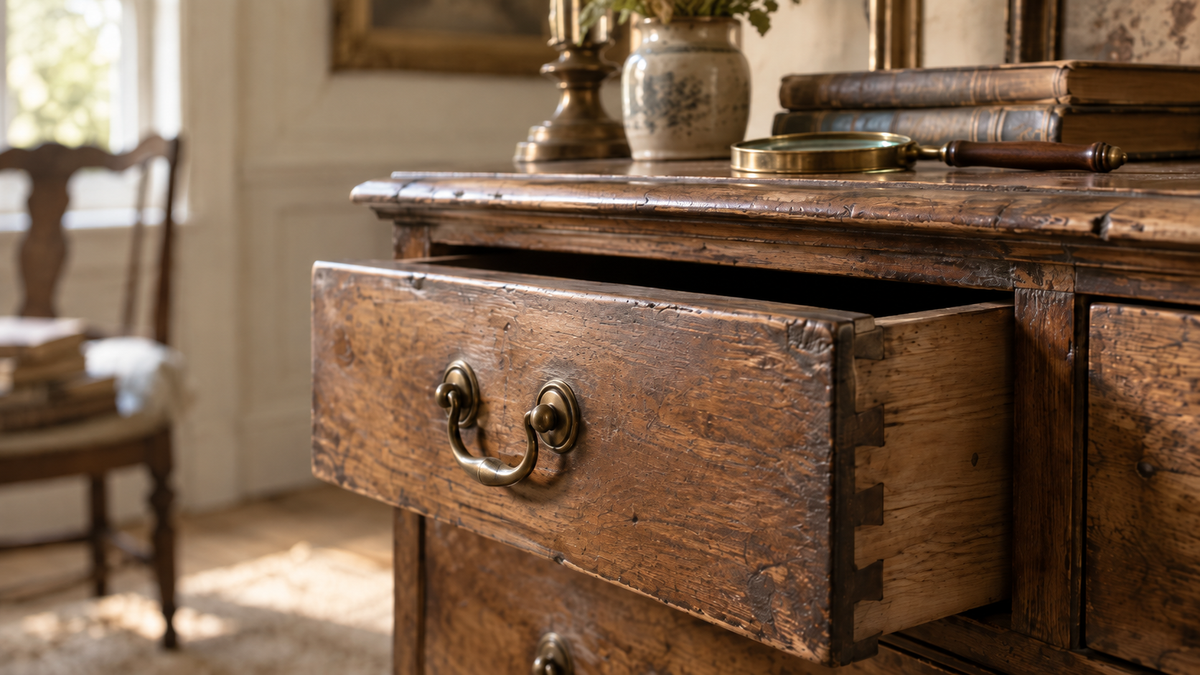
Hand-cut dovetails, pegged mortise and tenon joints and well-fitted drawers may indicate a higher level of craftsmanship.
But as we explored in our guide to dating antique furniture, no single joint can establish age or value on its own.
10. Size and Practicality Affect Today's Market
Market value isn't determined entirely by age and quality.
Furniture also has to work in modern homes.
This can make some pieces easier to sell than others.
For example:
- compact chests
- bedside cabinets
- small dining tables
- benches
- sideboards
- attractive storage furniture
may appeal to a broad range of buyers.
Very large wardrobes, enormous dining tables and oversized cabinets may be magnificent pieces but have a smaller potential audience simply because fewer homes can accommodate them.
That can affect their market value.
11. Fashion and Demand Change Over Time
Antique furniture values are not fixed.
Styles move in and out of fashion.
Furniture that was highly desirable twenty years ago may be less fashionable today, while previously overlooked styles can suddenly become very sought after.
Recent interiors have seen renewed interest in:
- primitive furniture
- farmhouse tables
- vernacular pieces
- patinated pine
- brutalist design
- mid-century furniture
- rustic Mediterranean furniture
- sculptural antique objects
This is why auction prices from many years ago do not necessarily reflect today's retail market.

12. Restoration Can Help or Hurt Value
Good restoration should ideally preserve as much original material as possible.
Sensitive work might include:
- tightening loose joints
- stabilising splits
- replacing a missing screw
- repairing a drawer runner
- treating active woodworm
- sympathetically reupholstering a damaged seat
Problems arise when restoration becomes excessive.
Heavy sanding, stripping, artificial staining or replacing original components can remove historical character.
The aim should usually be conservation rather than transformation.
Does a Replacement Part Make an Antique Worthless?
No.
Very few pieces of antique furniture reach us completely untouched.
A 150-year-old chest may have had:
- replacement handles
- a repaired foot
- a replaced lock
- new drawer runners
- later paint
- historic strengthening
The important thing is to identify these changes honestly.
Originality affects value, but sympathetic repairs are part of the normal life of furniture.
How Can You Tell Whether an Antique Is Valuable?
Before jumping to a valuation, consider the piece as a whole.
Ask:
- How old is it?
- Who made it?
- Is the maker documented?
- Is the design rare?
- How much is original?
- What condition is it in?
- Has it been heavily restored?
- What materials were used?
- Does it have provenance?
- Is there demand for this type of furniture today?
The combination of those factors is much more meaningful than any one of them individually.
Retail Value, Auction Value and Insurance Value Are Different
This is important.
A piece of furniture does not have one universal value.
Auction value
Generally reflects what buyers might pay at public auction.
Retail value
Usually includes the dealer's sourcing costs, restoration, transport, photography, research, storage and margin.
Insurance value
May be higher because it represents the cost of replacing a comparable object.
So if you see an auction result of £500 and a similar piece offered by a dealer for £1,200, that does not necessarily mean one of those prices is wrong.
They represent different markets.
A Piece Is Worth What the Market Is Prepared to Pay
Ultimately, antique furniture value is a combination of history, quality and demand.
The most valuable pieces tend to bring several desirable qualities together:
age + rarity + quality + originality + provenance + strong design + market demand.
But value isn't always purely financial.
A modest country stool with generations of wear may have far more character than a more expensive piece of furniture.
That sense of history is one of the reasons antique furniture continues to appeal.
At Odloft, we look for pieces with character, quality and individuality — furniture that has a story and can continue to be used for another generation.
Explore our current collection of antique and vintage furniture at Odloft.